IV
[MENU]
OPTIMIZING PRESENTATION PROCESS
CREATIVE RESEARCH
PROCESS STRATEGY
AI EVALUATION
CREATIVE LEADERSHIP
HIDE
CASE STUDY
*Disclaimer - This presentation was 43 slides long… I'm not doing that to you
Overview
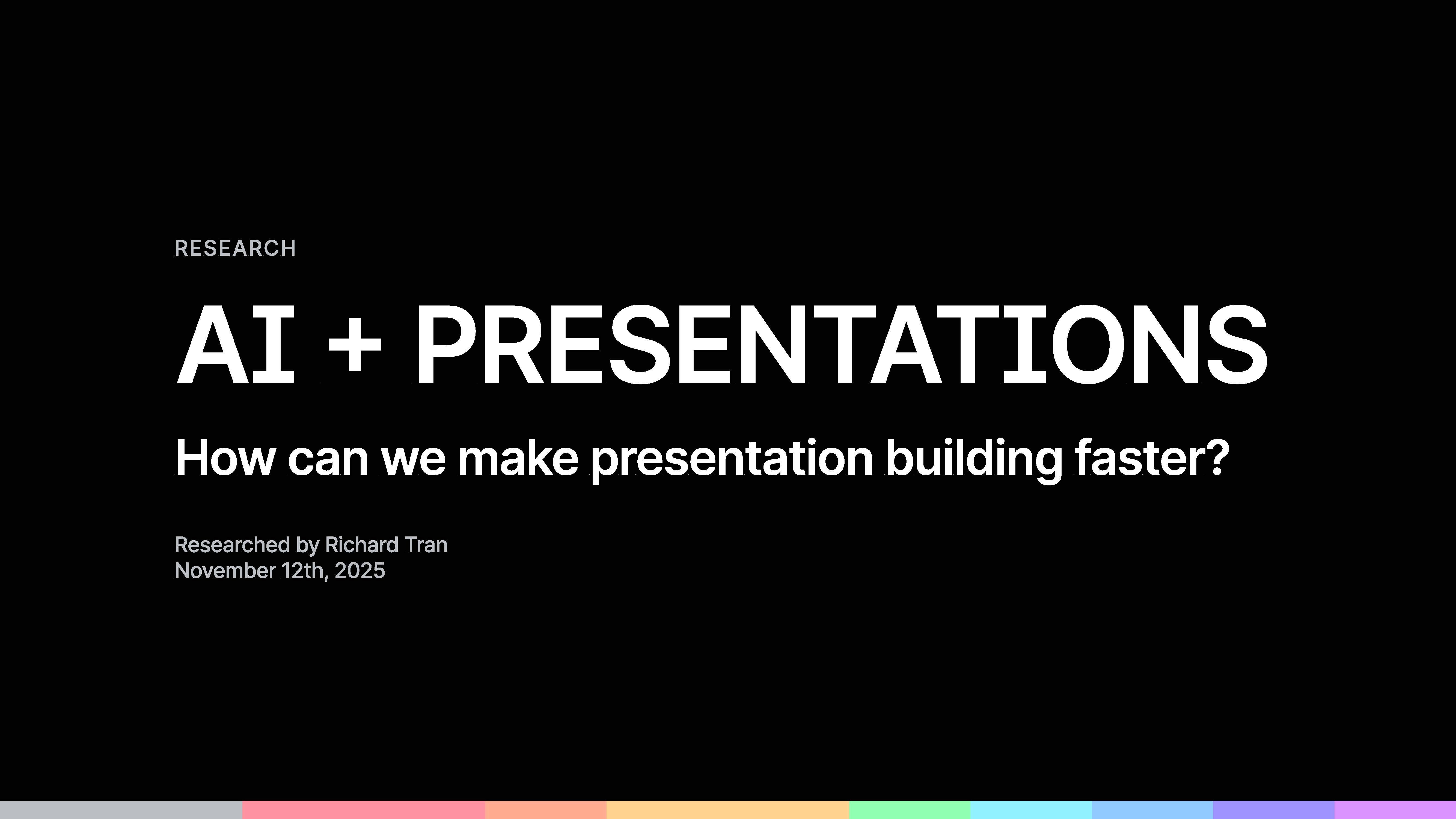
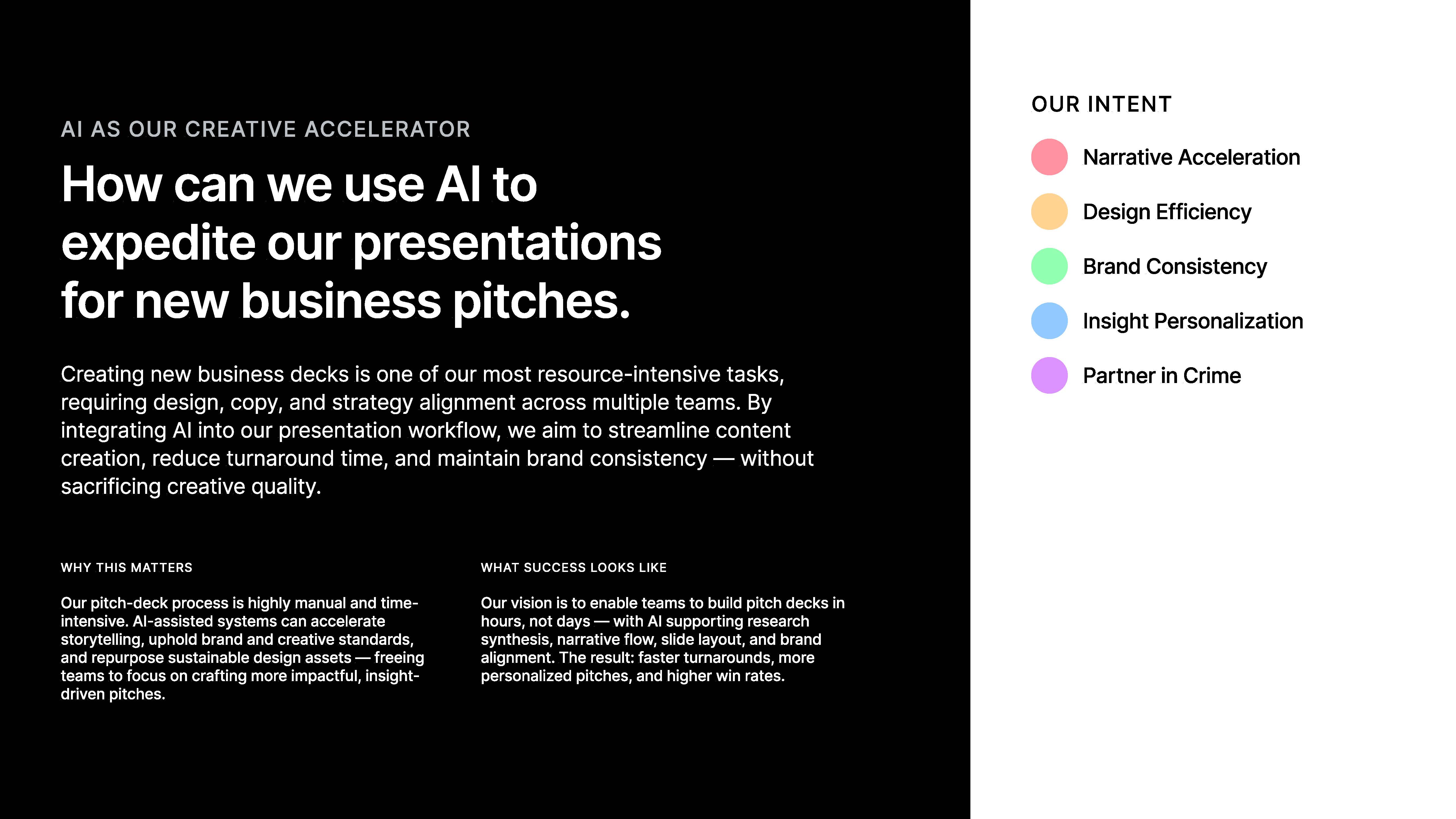
This project didn't start as a research initiative. It started as a frustration.
When I transitioned to a new team, a significant portion of my early work involved building partner-facing presentation slides — small, repetitive, and largely mechanical. I was still learning the business, still finding my footing, and spending creative energy on work that felt like it wasn't benefiting anyone. Rather than quietly absorb the frustration, I brought it to my manager and director. The conversation that followed led to a clear question: could AI help us work smarter here?
That question became a full research initiative — self-directed, methodologically rigorous, and ultimately presented to two creative audiences across the company.
The Methodology
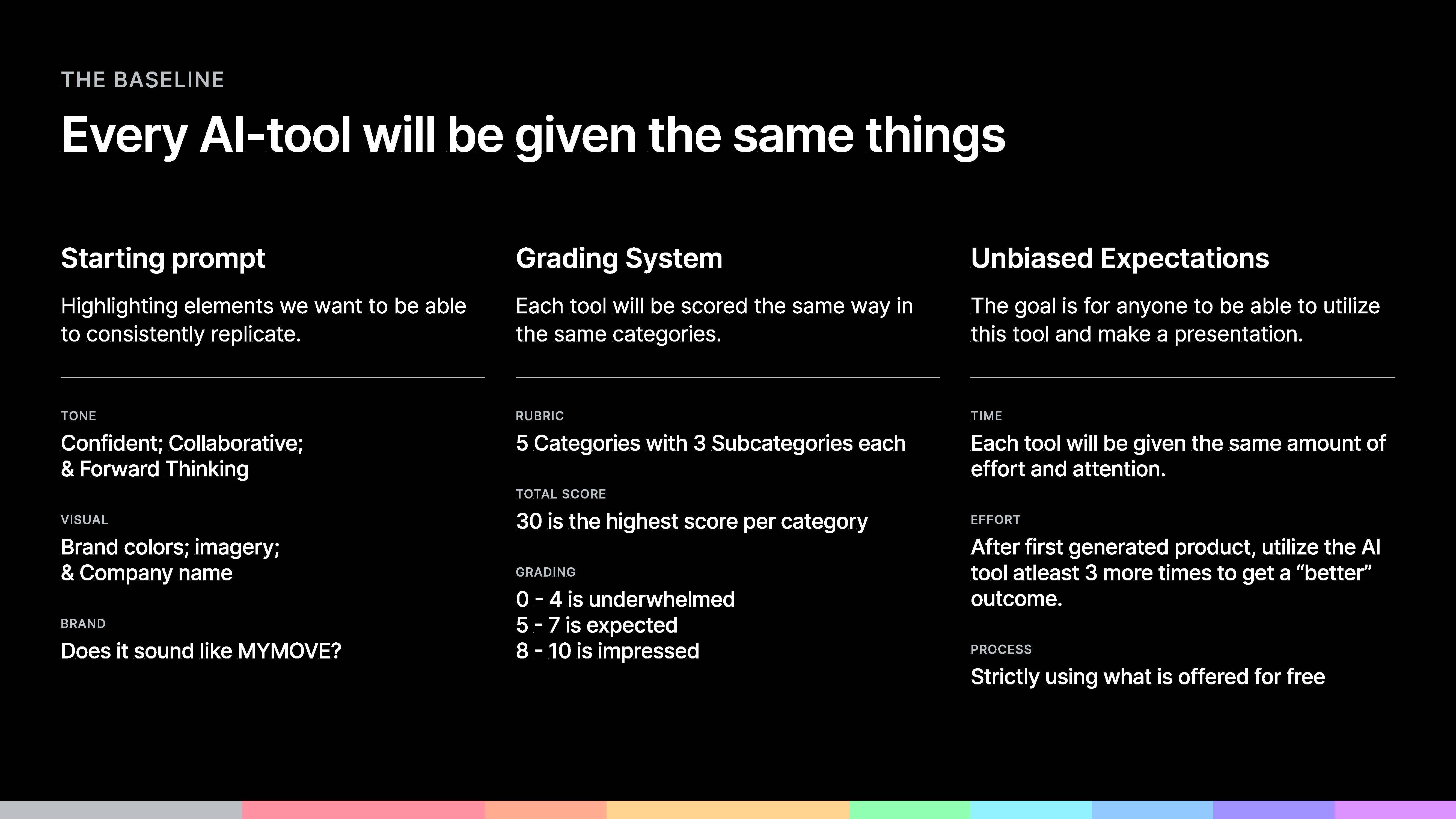
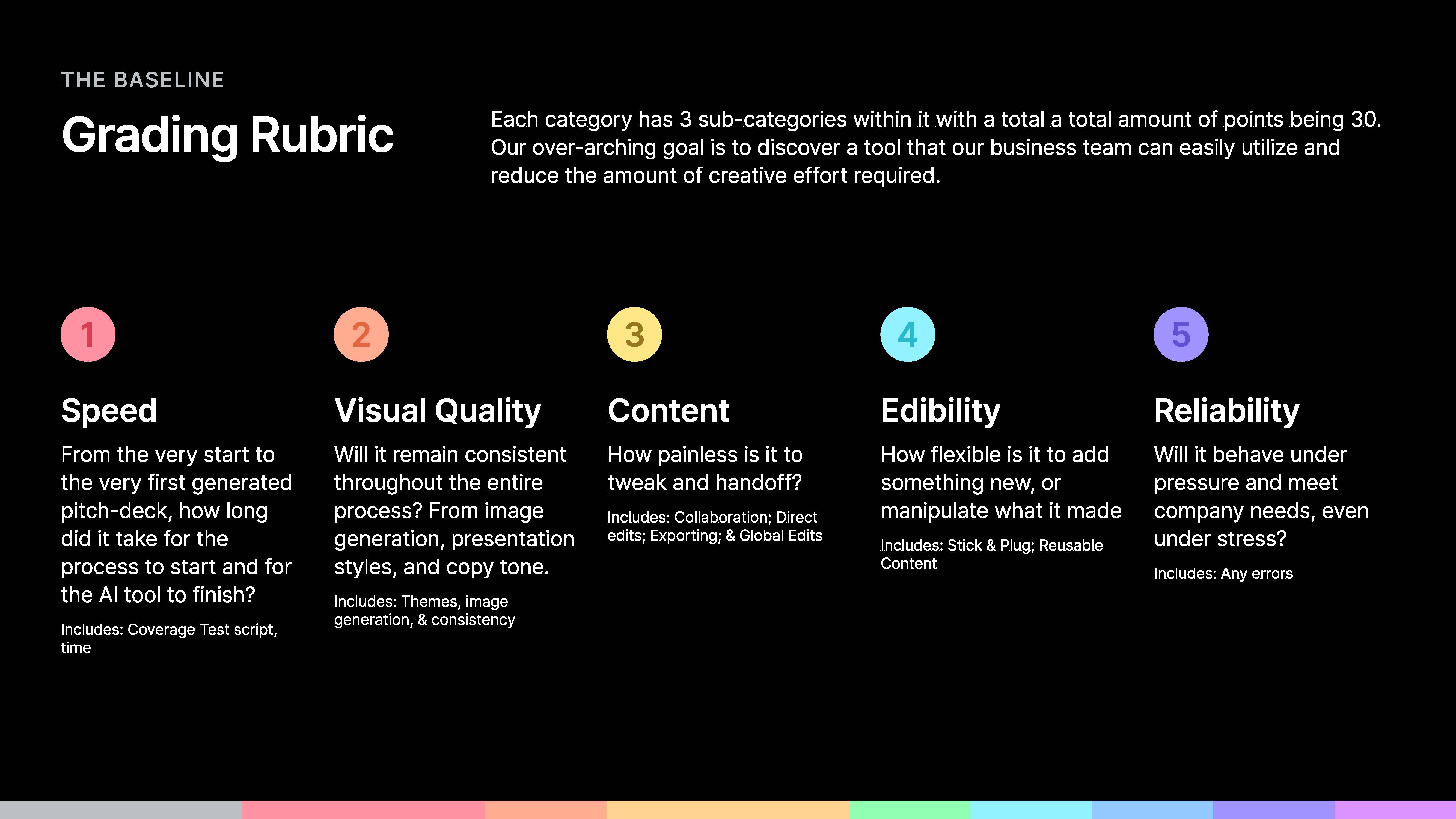
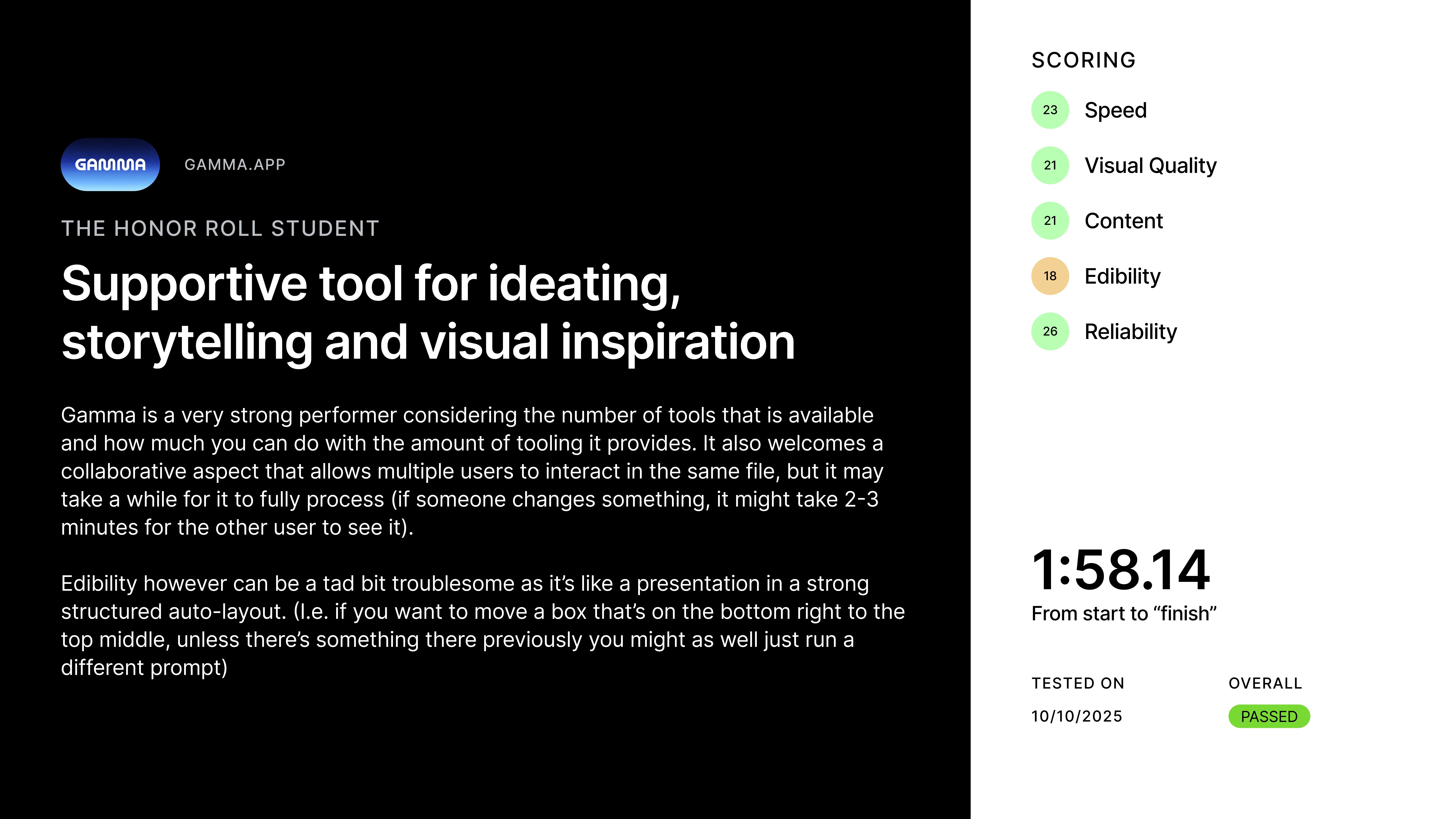
To evaluate AI presentation tools fairly, I built a consistent testing framework before touching a single tool. Every platform received the same prompt — a detailed, brand-specific brief for a MYMOVE × Partner collaboration deck — and was scored across five weighted categories: Speed, Visual Quality, Content, Editability, and Reliability. Each category carried subcriteria with a maximum of 30 points total.
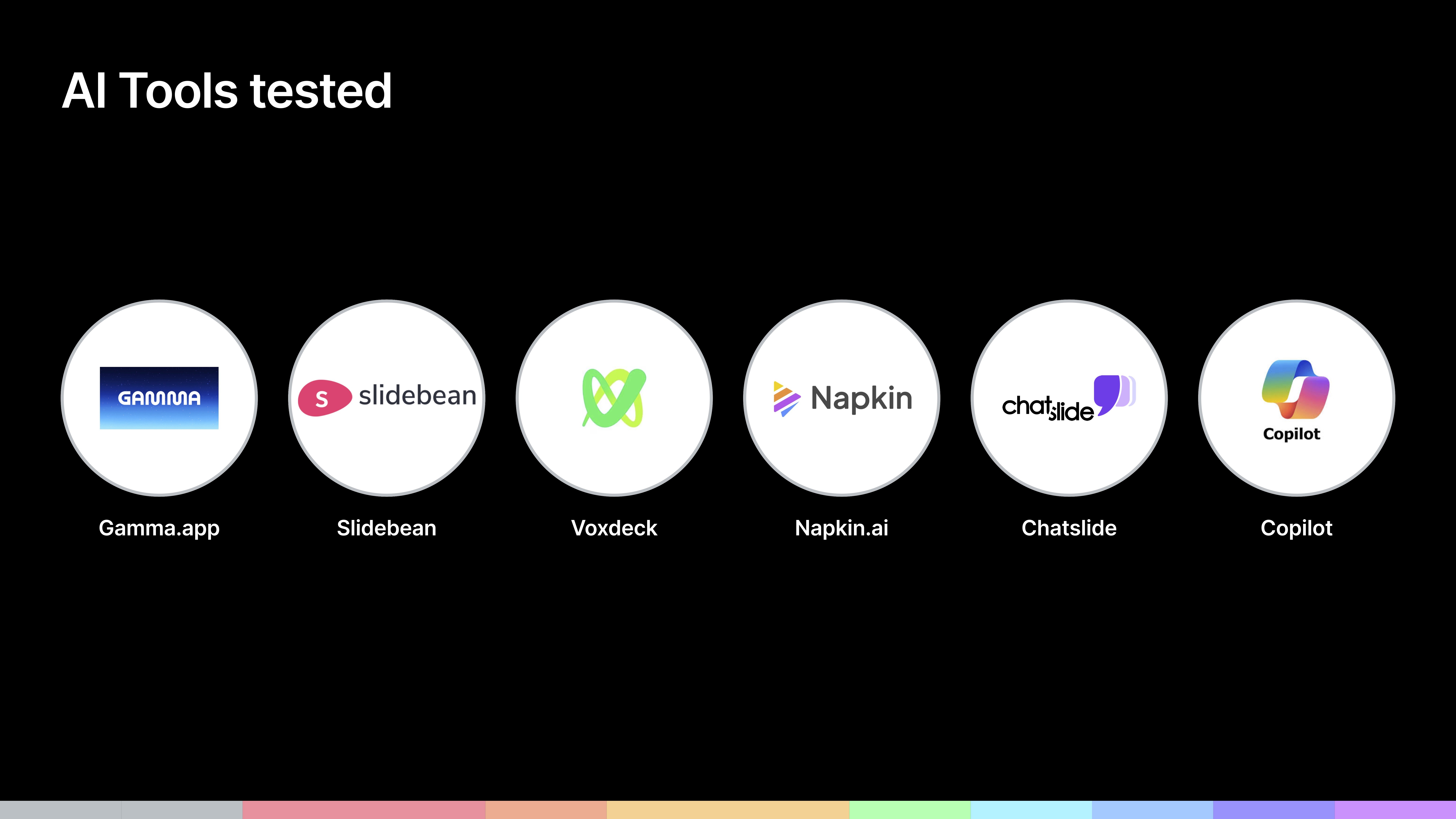
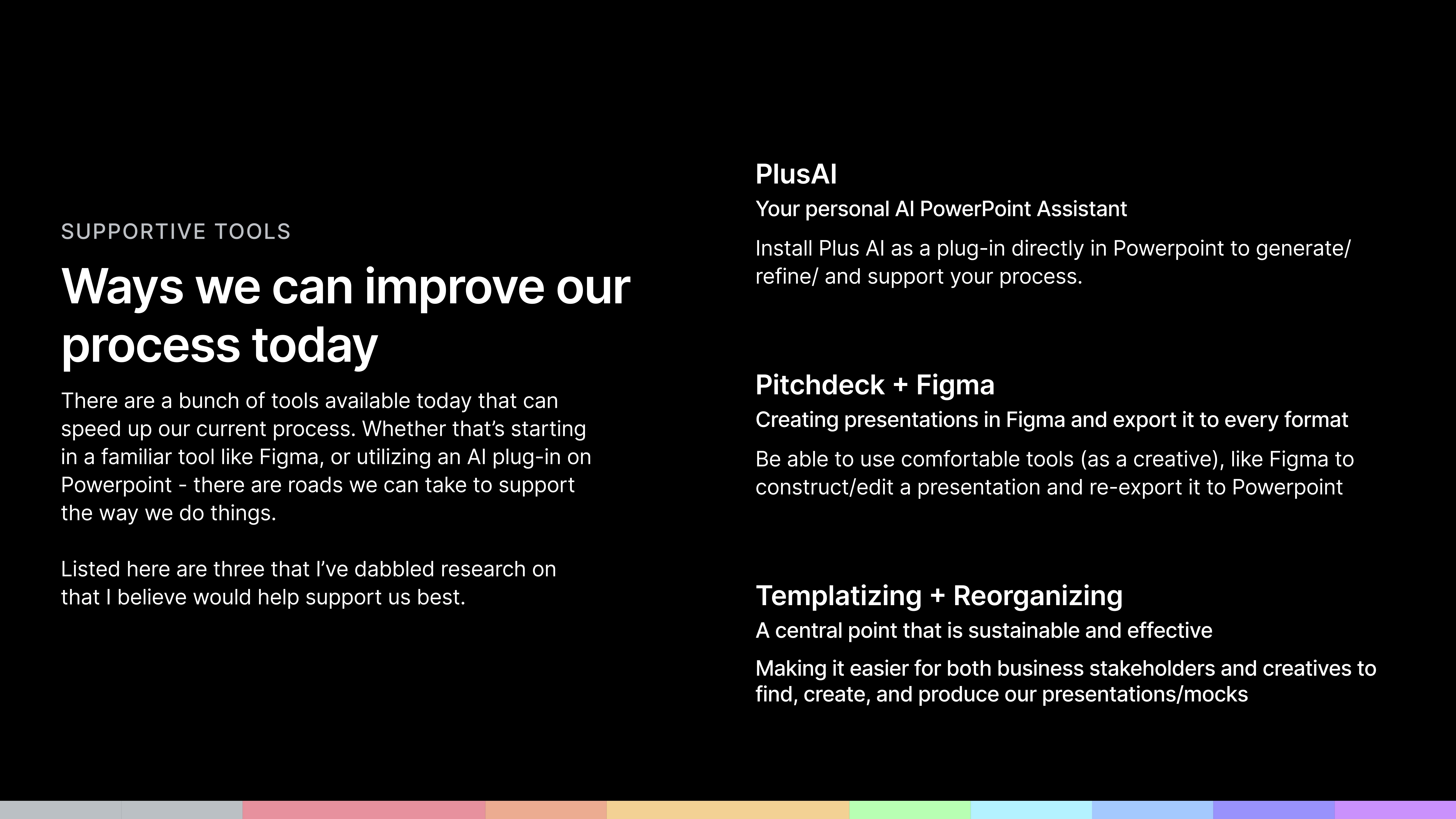
Six tools were tested: Gamma, Voxdeck, Slidebean, Napkin.ai, Chatslide, and Microsoft Copilot. Each was given equal time, equal effort, and equal conditions. The goal wasn't to find a winner — it was to find the truth about where AI presentation tooling actually stood relative to our creative standards.
The Findings
The results were decisive in some areas and
clarifying in others.
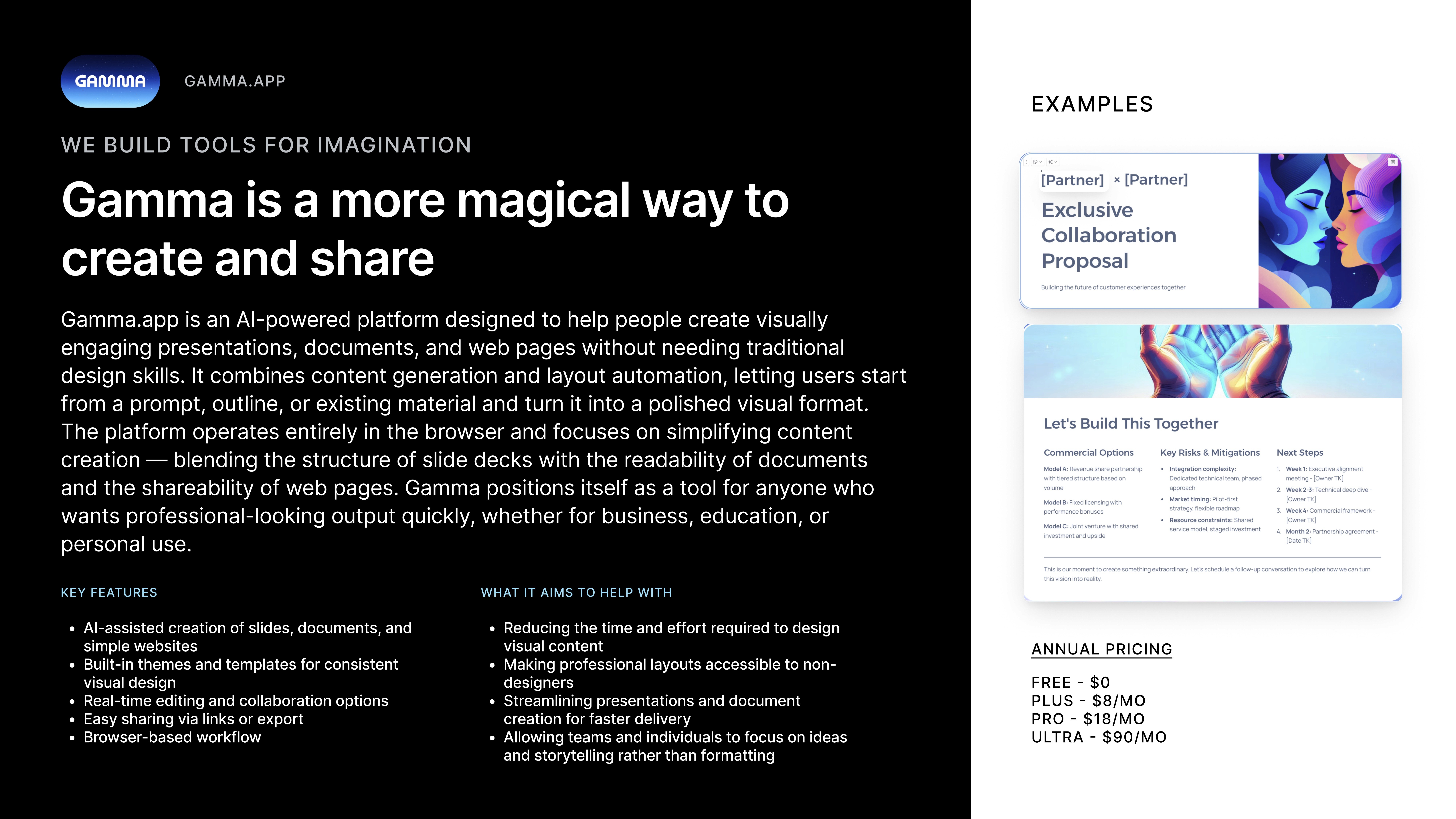
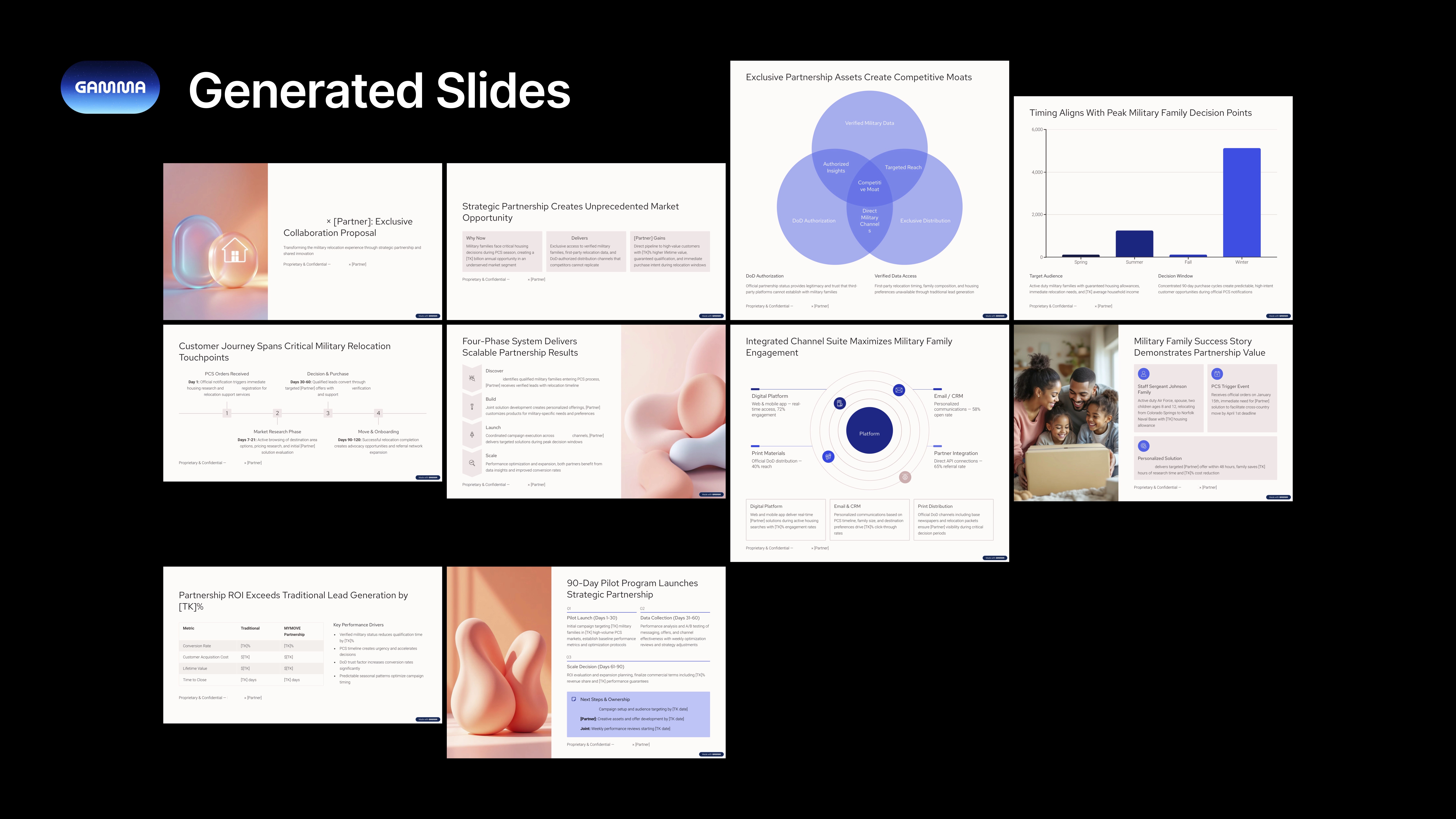
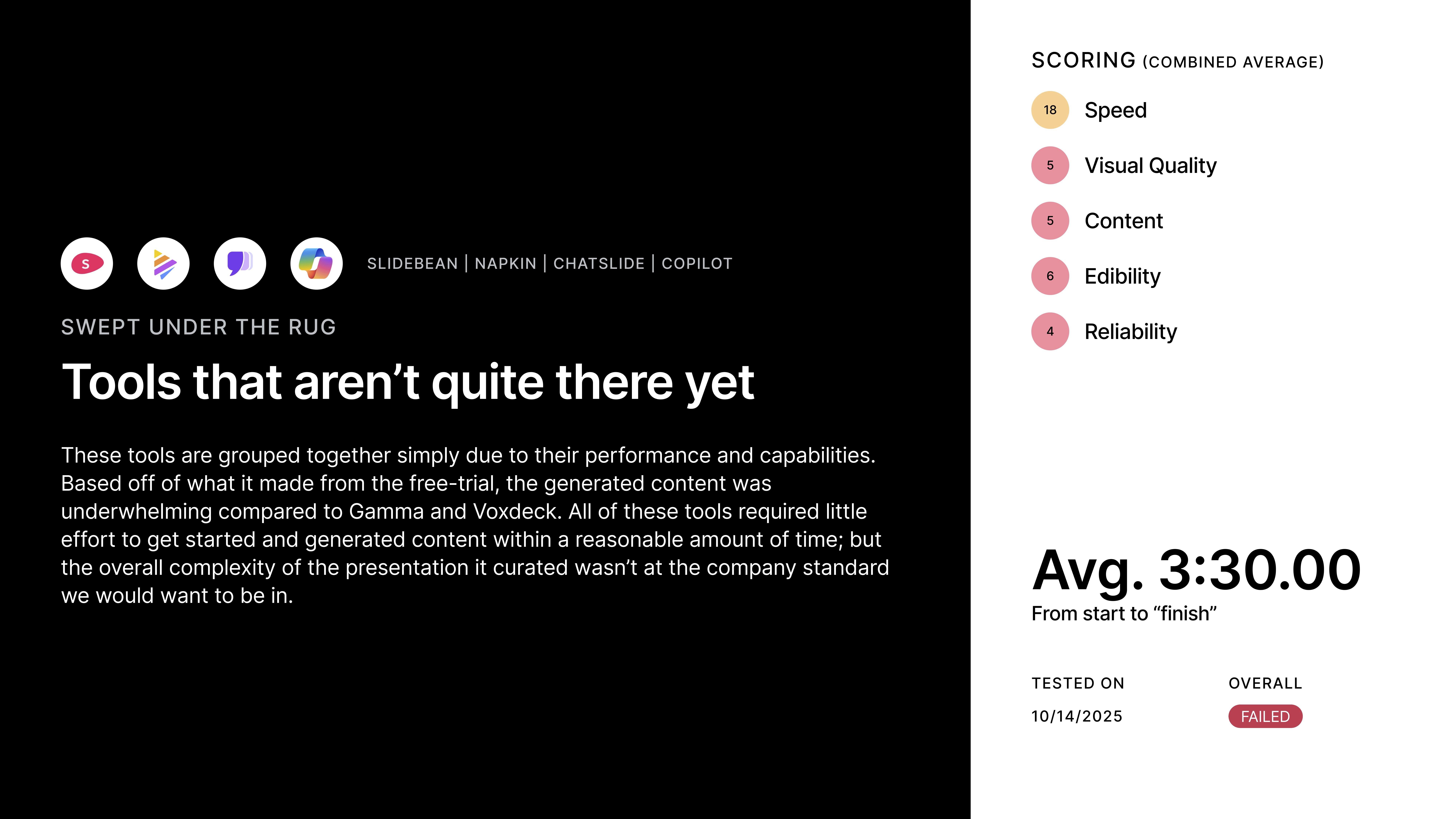
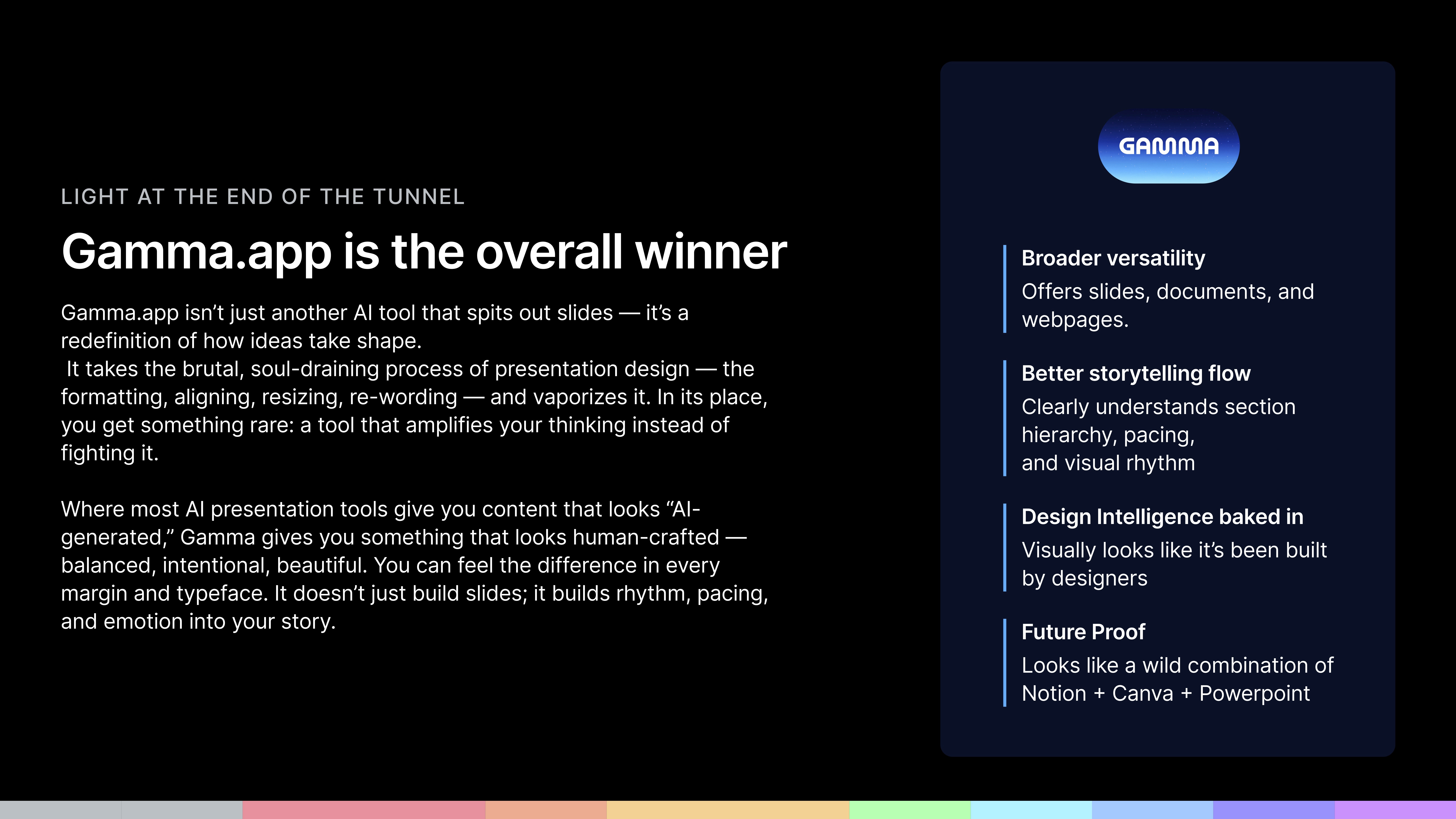
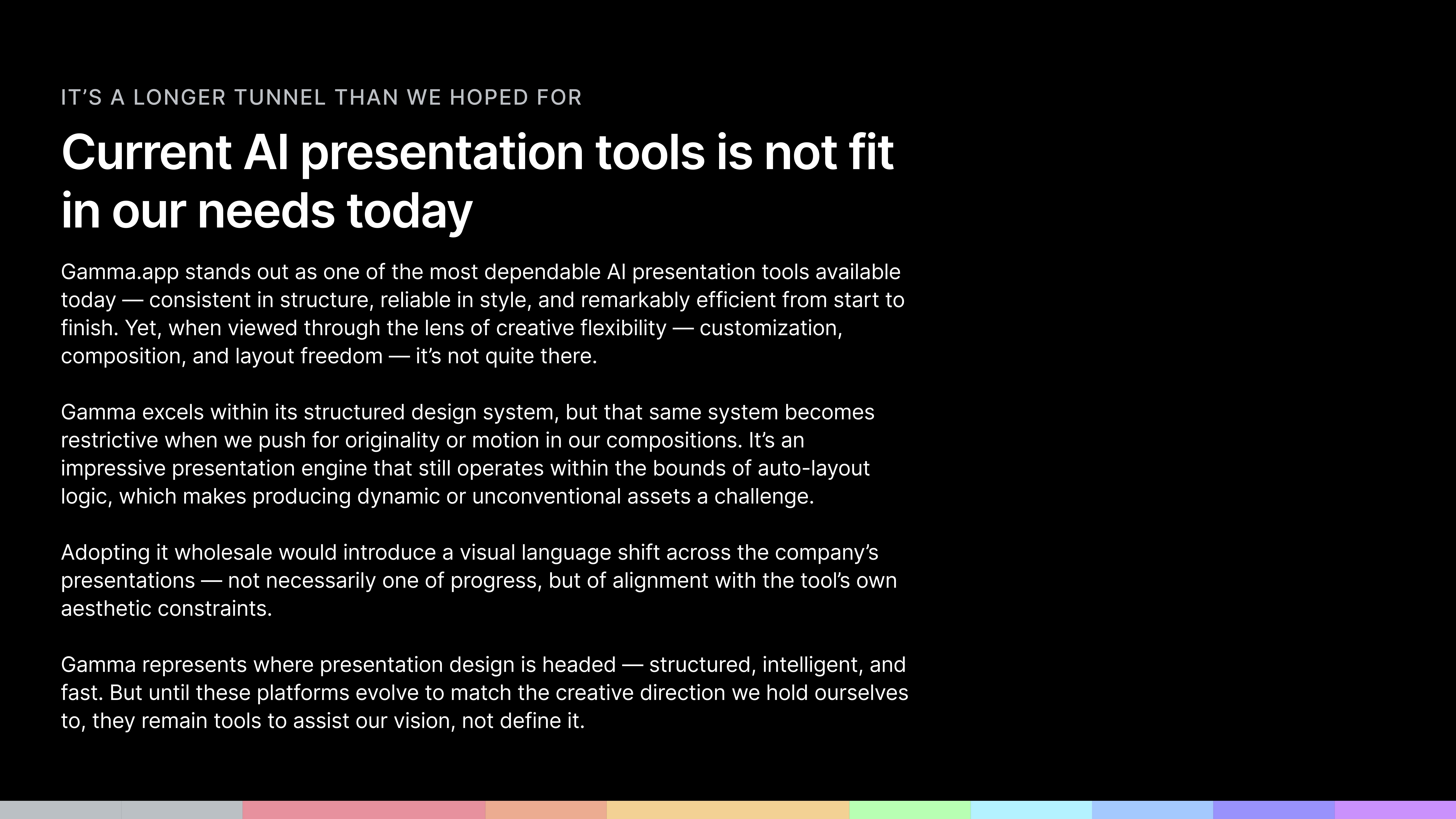
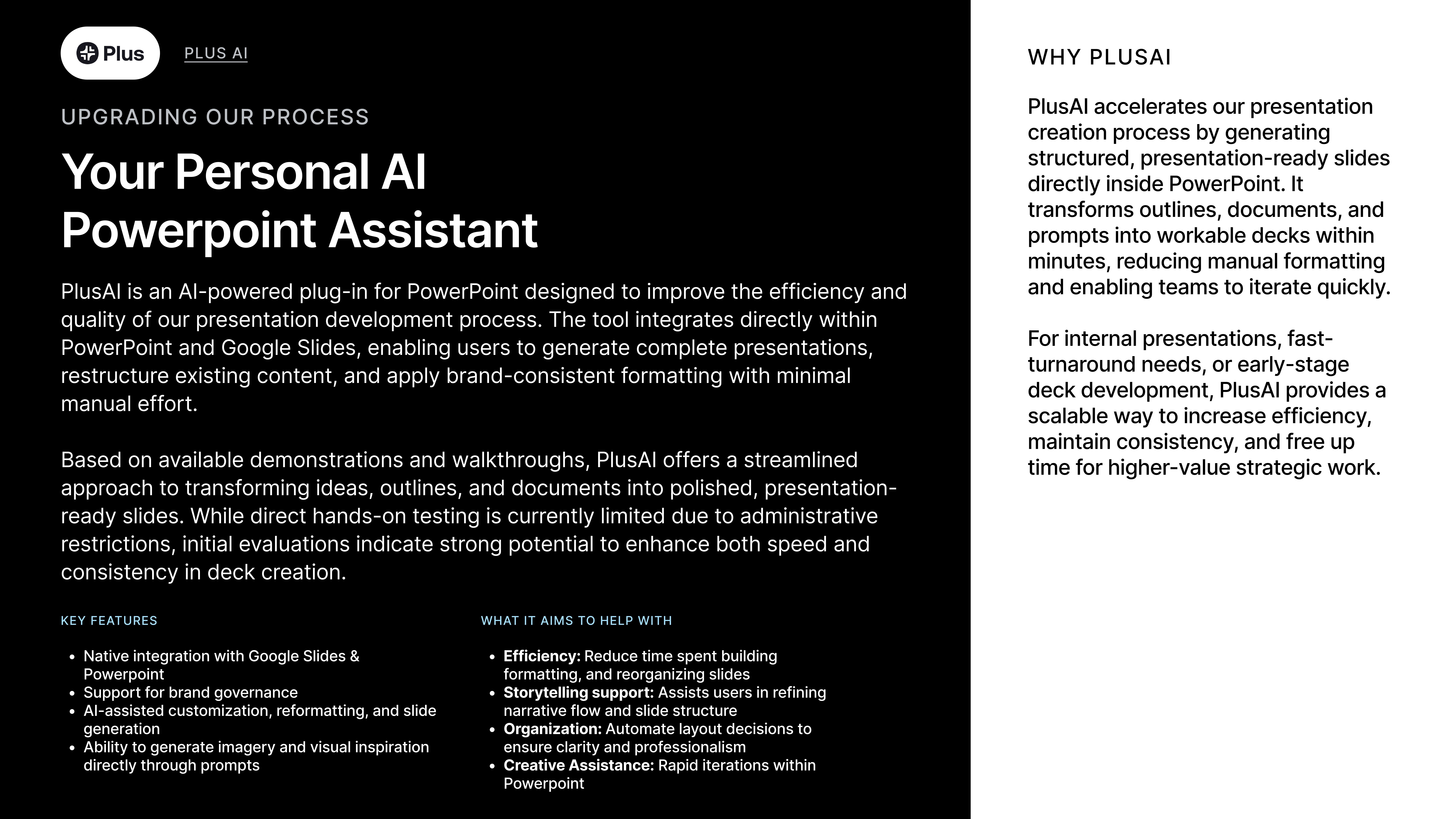
Gamma emerged as the strongest overall performer — fast, visually considered, reliable, and capable of producing content that felt human-crafted rather than generated. Its storytelling structure and design intelligence set it meaningfully apart from the field. Voxdeck showed promise in data visualization and content simplicity but fell short on editability and collaboration. The remaining four tools — Slidebean, Napkin.ai, Chatslide, and Copilot — were grouped together as tools that weren't ready for our standards, each limited in different ways but unified by the same core problem: they optimized for output volume over creative quality.
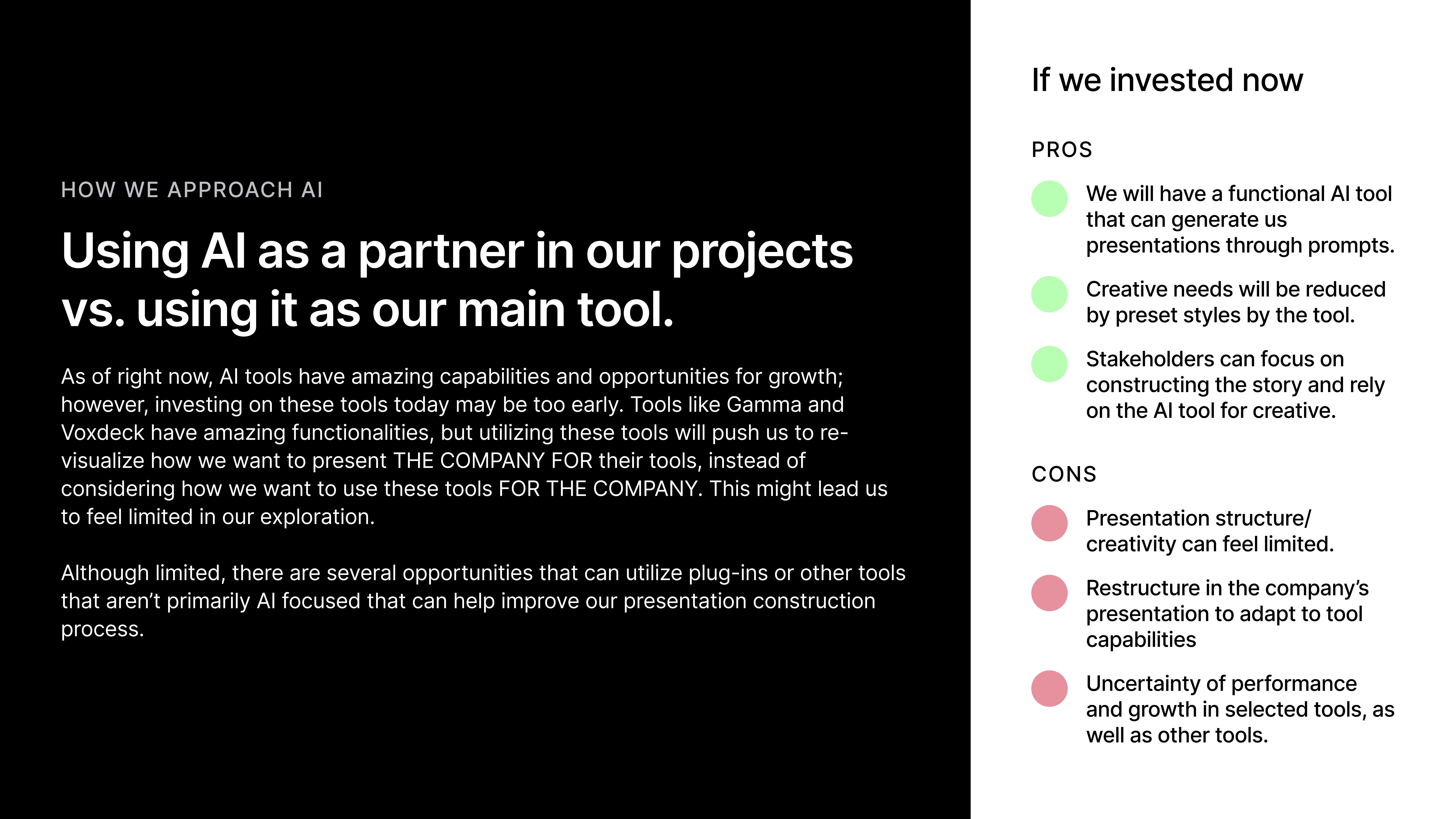
The broader finding wasn't about any individual tool. It was about a pattern. Every tool, to varying degrees, asked us to adapt to its constraints rather than amplifying our own. We were trying to make the AI tool work — instead of finding AI tools that work for us. That distinction became the thesis of everything that followed.
The Presentation
I presented findings to my immediate creative team and then to the broader company creative team. Walking into the larger room, the energy was mixed — skeptics, the curious, and those who had already tried tools on their own and hit walls. What surprised me was how quickly those different starting points converged. Everyone had felt the same friction. Everyone had experienced the gap between what AI promised and what it actually delivered in a brand-sensitive context.
The discussion that followed was one of the most generative parts of the whole project. Rather than defending the research, I restated the direction as my own position: don't look for tools that can replace the work. Look for tools that can support the thinking. AI should guide us toward ideas we can own and refine — not make decisions we abdicate.
What Changed
The presentation moved the conversation from individual experimentation to collective strategy. Creative leaders began discussing licensing options and evaluating tools against budget. Gamma was adopted as a resource for ideation and structural inspiration — a starting point that designers could refine rather than a finished product to ship. The workflow became lighter, the philosophy became clearer, and the team had a shared language for how to evaluate AI tools going forward.
Takeaway
This project taught me something about being new. The instinct in a new environment is to fit in, absorb the norms, and earn your place quietly. But the "new person advantage" is real — fresh eyes see inefficiencies that familiarity makes invisible. I saw a workflow that wasn't working, said so professionally, and built something that helped the whole team move forward.
That's the kind of designer I want to be in every room I'm in — regardless of how long I've been there.
ROLE
ASSOCIATE PRODUCT DESIGNER
TOOLS
FIGMA
FIGMA SLIDES
GAMMA
SLIDEBEAN
VOXDECK
NAPKIN.AI
CHATSLIDE
COPILOT
PITCHDECK
PITCH.AI
CHATGPT
CLAUDE
VOLUNTEER WORK THAT GREW INTO BRAND STRATEGY
NEXT PROJECT: HOME EQUITY RATE TABLE
LETS COLLAB
richard@iv.works
SEE ALL WORKS
ABOUT ME